
PART 103 ULTRALIGHT PRACTICE
Free Part 103 Ultralight Quiz
Learn what legally qualifies as a Part 103 ultralight vehicle, where and when it may fly, the exact weather minimums, and how common configurations differ. Each free 20-question quiz is balanced across the full subject bank.
Free to take. No account required. Questions are randomly generated, so the next quiz will be different.
Every Part 103 rule, plus vehicle recognition
The dedicated bank covers all of 14 CFR Part 103: the legal definition, inspection and waivers, certification and registration, hazardous operations, daylight and twilight, right-of-way, congested areas, controlled and special-use airspace, visual reference, and every row of the visibility and cloud-clearance table.
Single-occupant eligibility254-pound powered limit155-pound unpowered limitFuel and performance limitsPermitted recreational useAirspace authorizationVisibility and cloud clearanceUltralight configurations
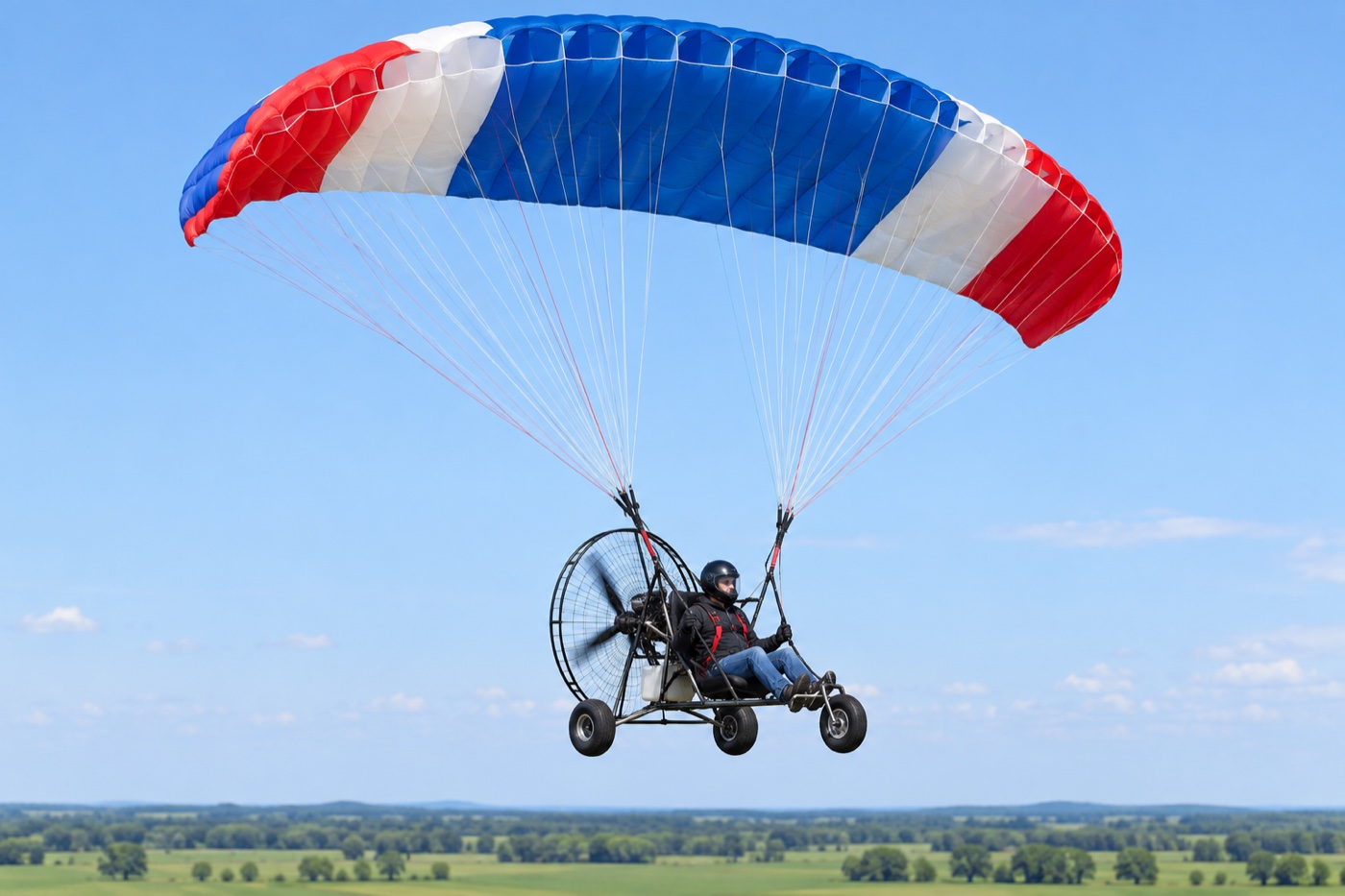
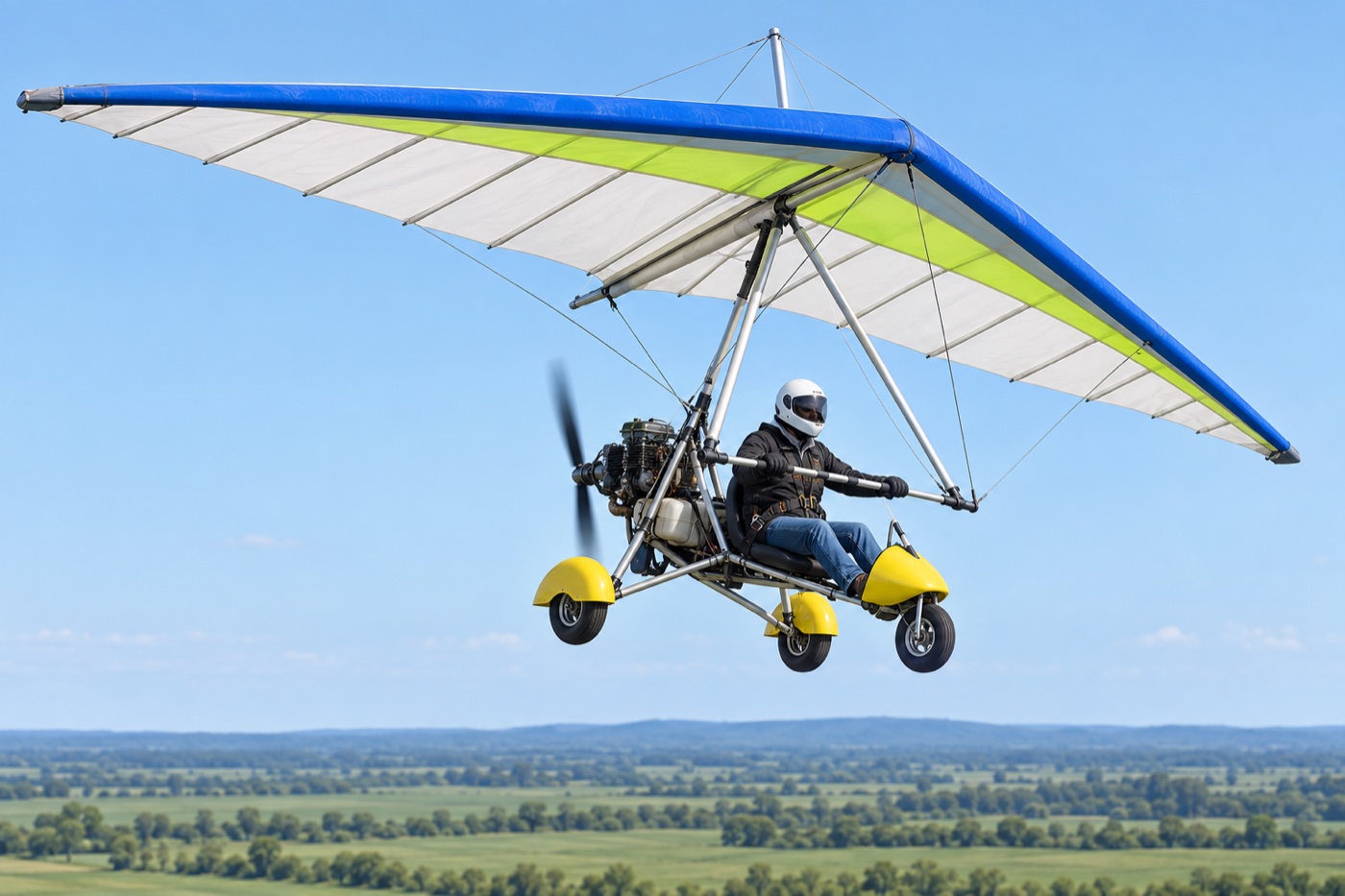
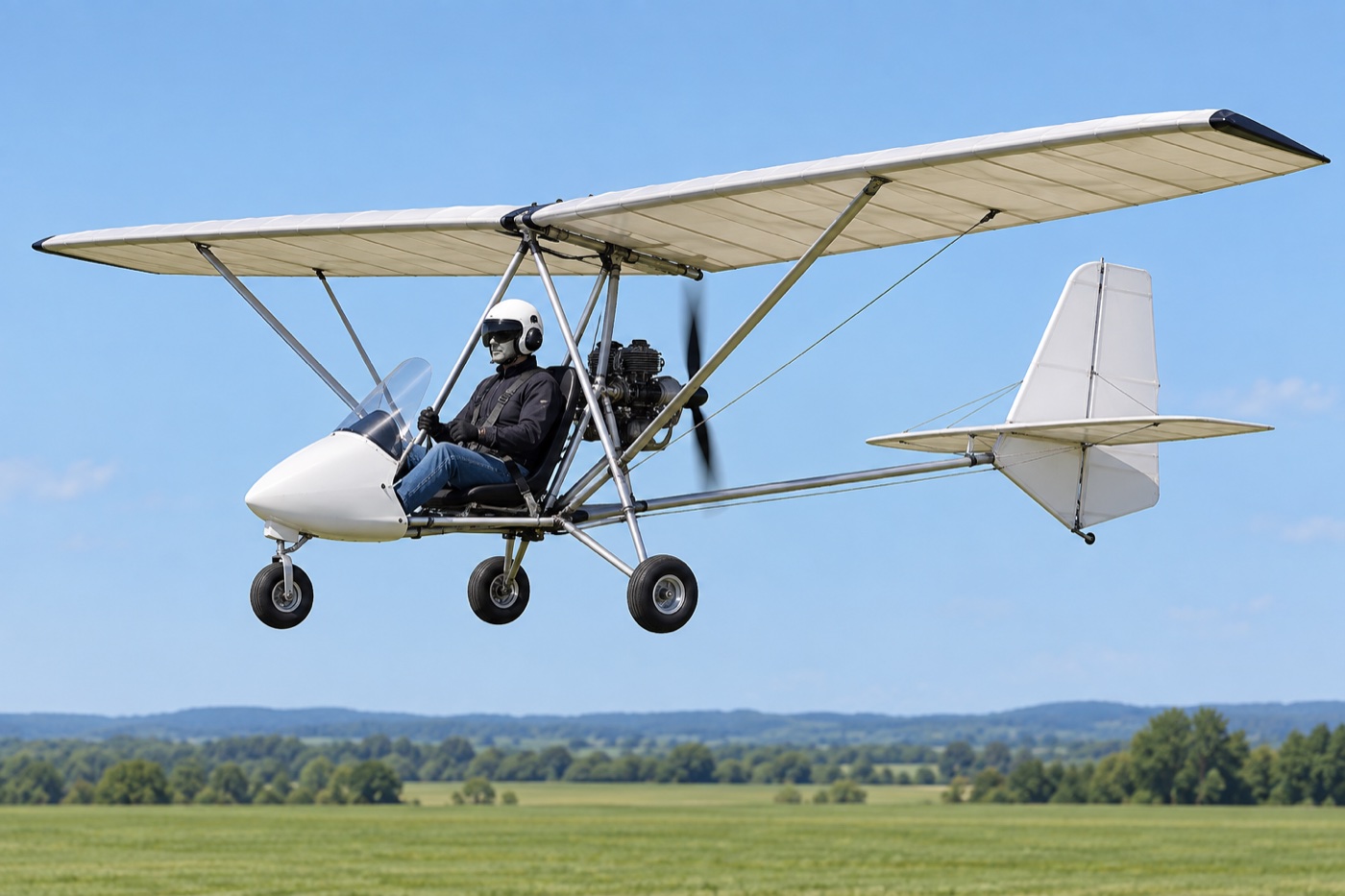
Original training illustrations add recognition challenges for powered parachutes, powered paragliders, weight-shift trikes, fixed-wing pushers and tractors, hang gliders, and free balloons. A picture can identify the configuration—but only the facts can establish legal Part 103 eligibility.
WHAT LEGALLY QUALIFIES
Part 103 describes a vehicle and its operation—not a brand name
A vehicle operated under Part 103 must be used by a single occupant for recreation or sport. An unpowered vehicle must weigh less than 155 pounds. A powered vehicle must weigh less than 254 pounds empty, excluding floats and safety devices intended for deployment in a potentially catastrophic situation; hold no more than 5 U.S. gallons of fuel; have a maximum full-power speed of no more than 55 knots calibrated airspeed; and have a power-off stall speed of no more than 24 knots calibrated airspeed.
A familiar model name, seller claim, or photograph cannot prove compliance. Options, engine choice, instruments, brakes, fairings, recovery systems, repairs, and owner modifications can change weight or performance. Verify the actual vehicle.
WHERE AND WHEN YOU MAY OPERATE
Minimal certification does not mean unrestricted flight
Part 103 does not require the operator to hold an FAA airman or medical certificate, and a qualifying vehicle does not need aircraft registration or an airworthiness certificate. The operating restrictions still matter: no hazardous operation, no operation over a congested area or open-air assembly, and no operation in specified controlled or restricted airspace without prior authorization from the controlling facility.
Operations are generally limited to the period between sunrise and sunset. Civil-twilight operation is allowed only under the rule’s conditions, including an operating anticollision light visible for at least 3 statute miles. The operator must maintain visual reference with the surface, yield the right-of-way to all aircraft, and satisfy the visibility and cloud-clearance requirements in § 103.23.
Example:
A 248-pound single-seat vehicle with 5 gallons of fuel is not automatically legal under Part 103. You must still verify full-power speed, power-off stall speed, purpose, equipment and modifications, and whether the proposed location, airspace, time, visibility, and cloud clearance comply.
Study the exact sources
14 CFR Part 103
§ 103.1 Applicability
Part 103 operating rules
PHAK: aircraft and ultralight vehicles
PHAK: ultralights and airspace
Compare Part 103, Sport, and Private privileges
This is a study summary, not a legal determination for a particular vehicle or flight. Review the current regulation and obtain competent training before operating.
What happens after the quiz
- Answer 20 randomly selected questions without looking up the answers as you go.
- Choose the best answer whenever more than one choice initially seems reasonable.
- Finish to save your answers; the completion page does not reveal your score.
- Unlock the results report to see your percentage, missed questions, explanations, and source links. These quizzes do not use a pass-or-fail label.
FROM THE DISCUSSION BOARD
Ultralights (Part 103)
Recent comments will appear here.